

And the crowd goes wild
Our (final?) descent into barbarity, and probably, revival

Friends,
Today marks one month since the incident at Utah Valley University. I’m actually not going to talk about Charlie. Many others already have. While I definitely believe there’s some dastardly, supernatural sleight-of-hand going on at the moment in our nation, and I have my own perspective, I’m not going to delve into those things right now. Instead, I’m going to talk about what this whole saga has been revealing.
Instead, I’m going to talk about you. And us. And what we’re headed for.
God, please help us.

Jesus is just… different. Seriously.
The Sermon on the Mount is one of the most iconic points of Jesus’ ministry.1 Overlooking the surrounding Galilean green hills and lake-towns, with a gentle breeze from the Sea carrying His words up and down the slope where crowds eagerly listened, shoulders brushing together, Christ gave what is considered one of His most salient teachings. Like a new Moses, on a new mountain, Jesus provides a new law for a new life — what Oswald Chambers called “the life we will live when the Holy Spirit is having His way with us.”2 Among several admonitions that fly in the face of natural instinct, our Lord commanded the following:
43 “You have heard that it was said, ‘You shall love your neighbor and hate your enemy.’ 44 But I say to you, love your enemies and pray for those who persecute you, 45 so that you may be sons of your Father who is in heaven.”
— Matthew 5:43-45
Pause for a moment and reflect on just who Jesus was talking to: pomegranate farmers and fishermen’s wives, lonely potters and ragged herdsmen, widowed mill-grinders. All of them oppressed under the iron thumb of Rome; all of them disappointed; all of them taken advantage of in a thousand disparate ways; all of them waiting for a Messiah many weren’t sure they believed in anymore. Yet the Rabbi tells them to 1) love and 2) pray for their enemies. Like a blacksmith opening a forge, Jesus invites people inside to see the hard, dirty work of what being God’s People really looks like. And with this command, He brings the hammer clamoring down on the anvil.
How we need the sparks ignited by His words now.

“Adversity does not build character—it reveals it.”
James Lane Allen
I remember the rumbling of the ground in the morning during harvest season. The tree-shakers were there.
Growing up on a church property with groves of walnut trees, it was fascinating. Every year, the mechanical behemoths would come — one of them straight to our front yard, where a lone walnut tree shaded all but the furthest corners. As the shaking began, waves of walnuts would fall to the ground. One thing I recall is there were always more than you would expect just by looking up at the long, leafy branches. More than that, surrounding things got displaced: blue-bellied lizards darted around, mother squirrels awoke from sleep in their underground boroughs, petals fell from flowers and birds scattered away. All from the shaking.
And right now? Stuff is being shaken up.
Cultural crises have a way of shaking up veneers of respectability and uncover layered hypocrisy in the loam. The very same people who rail against the death penalty for those who have done even the most sordid crimes are now indifferent (if not elated) about the prospect of seeing the gruesome public murder of a person who was… discussing ideas they didn’t like?
Make that cognitive dissonance make sense.
People who talk about peace and tolerance celebrate wickedness.
Dude. What are we doing?

Behold, the grand difference between Us and Them.
By Us, I mean those under the influence of the compassionate Spirit of God.3
By Them, I mean those under another influence — the influence of the demonic. These diametrically opposed forces from polar opposite sides contribute to a culture war blaring around us.4
And I don’t mean politically. That’s downstream of the real struggle. But no: this is a deeply, deeply spiritual conflict.
When people are under the influence of the demonic, they descend into non-human, bestial behavior.5 They will relish, squeal and giggle at the suffering of those they disagree with. Blood is an exciting shock factor. For those of us who love Jesus, it means we love people. It’s a kind of love that’s supernatural in essence and endless in scope, a love that doesn’t wish harm on the worst of our enemies. Crisis unveils what’s going on in the spiritual world, hence the tensions most of us feel: simply put, “In a time of social unrest, there’s going to be more spiritual warfare.”
And boy is there ever. Look, I am a Christian. There are a handful of people in the culture right now I really don’t like. I can, however, genuinely say I would feel authentic compassion were something like this to happen to one of those people. Especially for their innocent, freshly-orphaned children.
Oh yeah, I forgot, though: Biblical ideas are “hate speech,” and “hate speech” somehow IS violence, and this thing we’re living in is all a sick, upside-down game. At least, to some.
Meanwhile, a few things are happening, things which seem contradictory because, well, they are. But they’re happening nonetheless. Emboldened evil is bubbling to the surface, unabated by long-held common decency, and croaking from it’s dribbling mouth poisonous words to incite more violence. Meanwhile, clear lines are being drawn in the Western Church, lines that will prove pivotal to the witness of disciples of Jesus in the blossoming days of the new era of humanity we’re stumbling into.
Mark Sayers, in his prescient book A Non-Anxious Presence, puts forth a penetrating analysis of the modern power structures marking the era of humanity today. His explanation is simple: we’re in a gray zone.
History shows us that an era tends to be dominated by influential individuals who shape its thinking, key events that determine its direction, movements that embody its longings, and artists who capture its mood. However, there are moments when ages overlap and eras mingle in a hybrid transitional moment. Thus, gray zones contain the influence of more than one era… gray zones are bridges in between eras.6
Living in-between eras can be disorienting because gray zones “exist in the overlap between the passing era and the era to come. One can be fooled that the old era is still dominant. Often as eras pass, their traits intensify.”7 You saw it during the wild election cycles of the past decade and felt it in your bones during COVID lockdowns. And BLM riots. And Target boycotts. And church scandals. Not just typical, everyday craziness. Something… else was going on, and still is. A shaking; an ushering into a hostile, insecure gray zone of human history.
Gray zones like the one we’re in have an apocalyptic quality to them, as I pointed out in a recent note:
The curtains are being drawn open; the blanket is getting ripped away. What apocalypses tend to do is provide a big splash of cold water to the face for us to realize the way things really are — most importantly for the Church. Time to wake up. When darkness reigns and the crowd goes wild, you know it’s high time to pay attention.
So, what’s going on spiritually?
Well, when the president of the Oxford Union posts “Charlie Kirk got shot, let’s f*****g go,” you get an idea.
When a gay throuple in Canada gets approved to adopt a 3-year-old girl together, you get an idea.
When a candidate for Attorney General of Virginia thinks his opponent’s children should die, you get an idea.
When Islamic militants mercilessly behead dozens of Christians in Mozambique, burning down homes and churches, you get an idea.
In recent words from Rod Dreher:
We now know — the evidence has been widespread on left-wing social media this week — that the USA is home to lots of people — including teachers, nurses, soldiers, and others in positions of responsibility —who are prepared to murder, or to support the murder, of people like us for the crime of believing in what Drew Pavlou quaintly termed “old-fashioned values.”
The enemy is on a rampage: the angry dragon is in persecution-mode.8
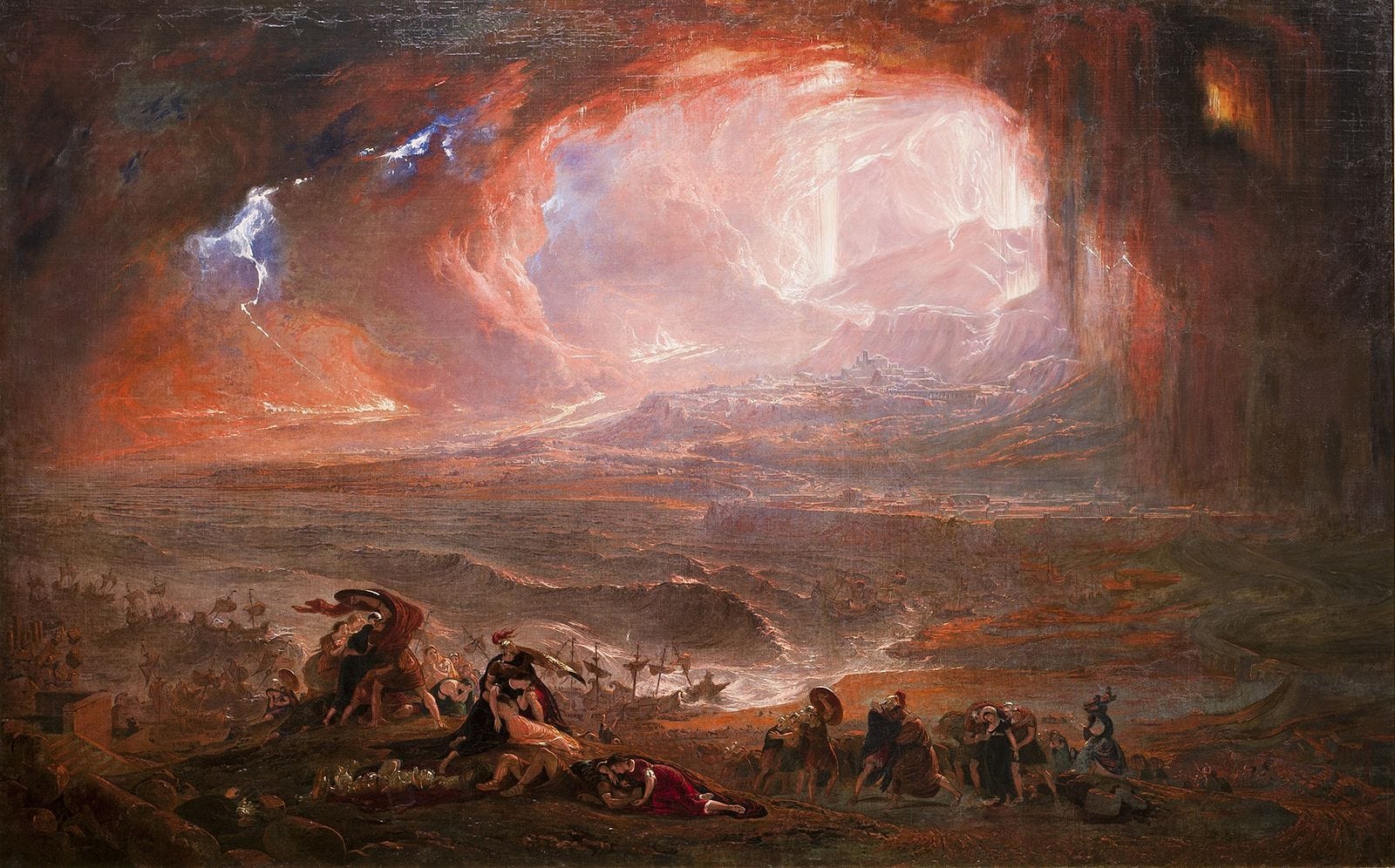
Like the aftermath of Vesuvius leaving evidence of the debaucherous immorality in pagan Pompeii, even in our day we see that, to borrow from Oswald Chambers again, “crises always reveal character.”9 In short, humans in rebellion to God are being revealed for the godless things they are: ravenous barbarians, going utterly wild, willing to destroy any who disagree with them. That feels like it’s heightened right now, exposed on a grander scale by bullets and political division.
But is that all this chapter has scribbled through it? Maybe not.

Just before the Great Awakening, the world was changing dramatically. The Thirty Years’ War and War of the Spanish Succession, among others, had devastated and reshaped Europe. People experienced more lateral movement, traveled more, and globalization was growing. The sciences, new technologies and philosophy began to change the thinking of the common man as Enlightenment ideals spread westward. Natural disasters and plagues and opportunities in the colonies added a cherry on top of the unstable sundae that was the early 18th century.
And then, God chose to do some big things. We call it the Great Awakening.
For you, for me, the world is changing again.
News of a quiet revival in the UK? Very interesting.
University campus movements are seeing thousands gather, like at Tennessee and South Florida, with hundreds confessing Jesus and being baptized.
Many churches in the U.S. have been experiencing record attendance, salvations and baptisms in the past month in the wake of civil unrest.
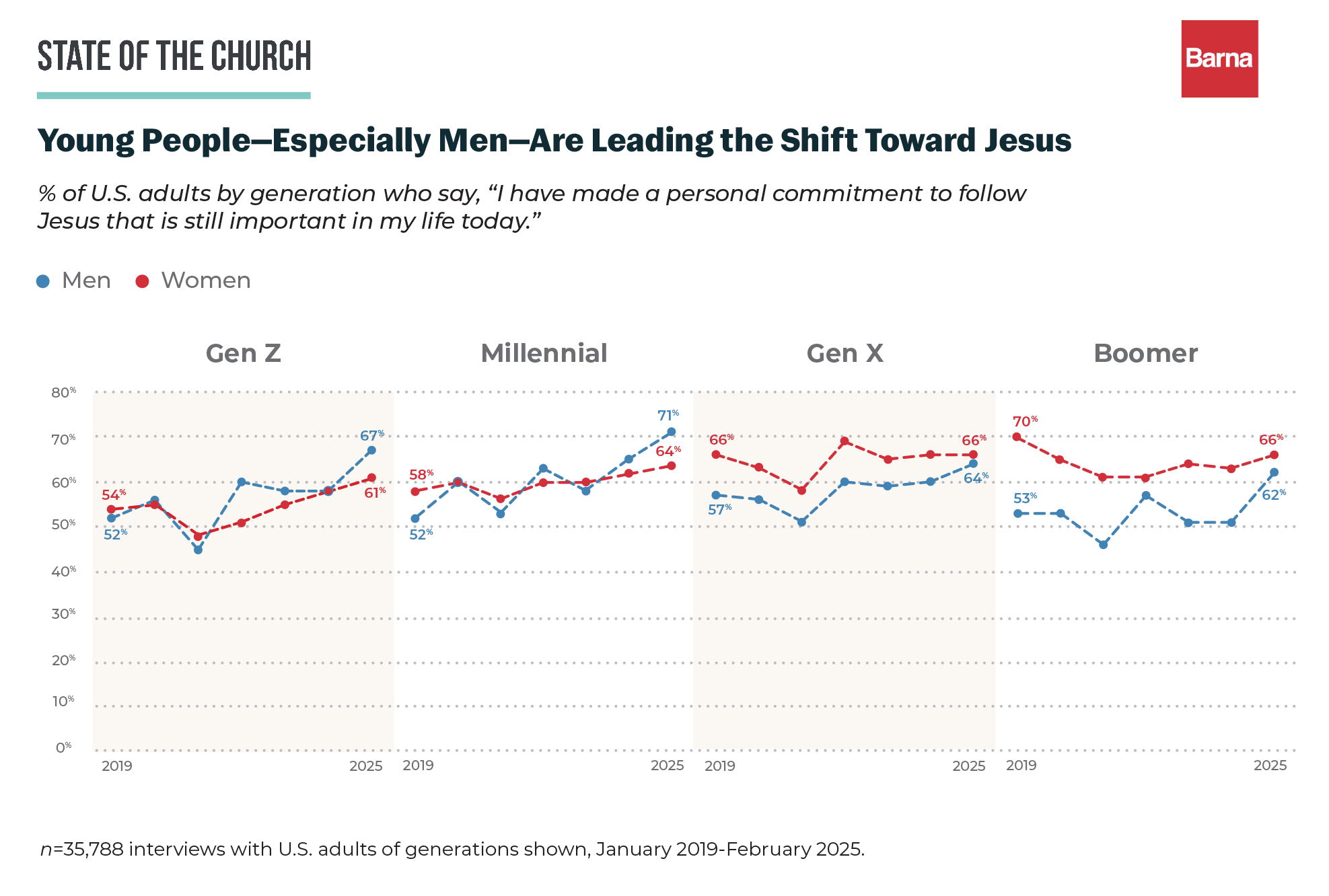
Back in April, Barna Group released a study revealing some telling data concerning younger people and the Church. The research found that Gen Z and Millennials are experiencing surges in statements of personal commitment to Jesus; not something superficial or nominal, but foundational and concrete.
This time of apocalypse, this cultural corrosion, this gray zone, finds us standing, according to Asbury Theological Seminary President David F. Watson, “at an inflection point in the history of Western Christianity.”
During a (really good) podcast episode, the aforementioned Mark Sayers zeros in on what it may look like to see spiritual renewal — maybe even revival — in our time:
People are getting fatigued with nonsensical relativist explanations of reality and want something more weighty and objective. Atheism isn’t sexy like it was 20 years ago10 and cynicism isn’t a smart approach to what we see unfolding in the story of humanity, either. Griffin Gooch, in an excellent piece written just last month, encourages us to embrace hope: “Killing cynicism doesn’t mean we have to ignore the evil in the world or hide under a rock. It just means that we have to love the world enough to continue to hope for it even when we come face-to-face with crippling amounts of doubt.” Our world is in a unique place where people are legitimately seeking the transcendent, and “even as lies saturate the culture, millions are reaching again for the truth.”
Basically, Christian, you need to look around and have some hope. The right dominos are falling for us to see a special move of God in and through us. When a cultural figure like a Charlie Kirk goes away, galvanizing many and stirring up scornful unrest in others, the atmosphere in our humanity can feel darker, heavier, nastier. But take heart — it hasn’t taken Jesus by surprise. The God of hope Himself is with us in it, longing to fill us with joy and peace, abounding in hope by the power of the Spirit.11
The West is primed. Jesus is making things ready. Spiritual renewal is teetering on the edge, waiting to fall on us with a gentle gust of the breath of God. We will need it in the coming days we are crawling into so that Jesus may be glorified in the earth. It will happen as we love and as we pray.
Love on, Church. Love on and pray hard.


See Matthew chapters 5 through 7.
Chambers, O. (1948). Studies in the Sermon on the Mount (4th ed.). Simpkin Marshall, Ltd, p. i. Full quote: “He did not come to teach us only: He came to make us what He teaches we should be. The Sermon on the Mount is a statement of the life we will live when the Holy Spirit is having His way with us.”
Interestingly, the first time Yahweh describes Himself in Scripture, He particularly highlights His compassionate nature: “Then the Lord passed by in front of him and proclaimed, ‘The Lord, the Lord God, compassionate and gracious, slow to anger, and abounding in lovingkindness and truth’” (Exodus 34:6). Caring about others is an intrinsic calling card to new life in the Spirit.
I’ll be specifically writing on the nature of the demonic world and how it interacts with our daily lives in the next installment of the Ekklēsia Nikaō series. Stay tuned.
This idea dates back to at least medieval theology, per thinkers like Boethius: “So it comes to pass that he who by forsaking righteousness ceases to be a man cannot pass into a Godlike condition, but actually turns into a brute beast.” Boethius, A.M.S. The Consolation of Philosophy. (1897). United Kingdom: Elliot Stock. p. 181.
Sayers, M. (2022). A Non-Anxious presence: How a Changing and Complex World Will Create a Remnant of Renewed Christian Leaders. pp. 23-24.
Sayers, A Non-Anxious presence, p.23
See Revelation 12:17.
Chambers, O. (1986). My Utmost for His Highest: Selections for the Year (Grand Rapids, MI: Oswald Chambers Publications; Marshall Pickering).
Justin Brierley does a fantastic job surveying the issues contributing to the fall of the New Atheism movement in his book (and accompanying podcast) The Surprising Rebirth of Belief in God.
See Romans 15:13.
Amen 🙏🙏
Amazing Pk